Open source · ESP32-S3 · 2.13″ e-paper
An e-reader you can build in an evening.
One board, about twenty dollars, no soldering. You flash it from a browser tab, join it to your Wi-Fi, and drop EPUBs onto it over the network. Then you read them on actual electronic paper, with a thumbwheel to turn pages.
The simulator is the whole reader — real books, real page turns — running in a tab. Nothing to buy to try it.
What you need
One thing is mandatory. Everything else is a choice about whether it lives on your desk or in your pocket.
| Part | Cost | Why |
|---|---|---|
| Elecrow CrowPanel ESP32 2.13″ ESP32-S3, e-paper panel, thumbwheel and two buttons, all on one board | ~$20 | This is the whole reader. |
| USB-C cable | have one | Flashing and power. Must carry data, not charge-only. |
| LiPo cell, 3.7 V with an SH1.0 plug optional | ~$5 | Untethers it. The board has the connector already. |
| Printed case optional — model is in the repo | filament | Two parts, prints flat, no supports. |
No soldering, no breadboard, no level shifters. The board ships assembled; the work is software.
Getting it running
-
Flash it from this site
Plug the board in and use the installer. It talks to the board over USB from your browser — nothing to install, no toolchain.
-
Point it at your Wi-Fi
First boot opens a setup hotspot. Pick your network once; the reader then prints its own address on the panel.
-
Send it books
Open that address, drop in an EPUB. Your browser converts it and uploads it in one step — no cable, no companion app, no account.
What it looks like
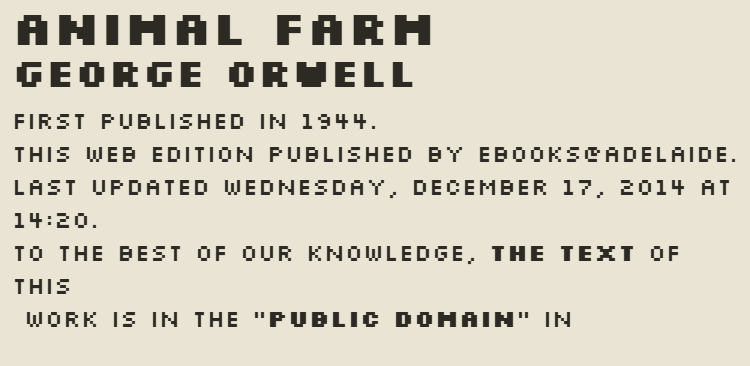
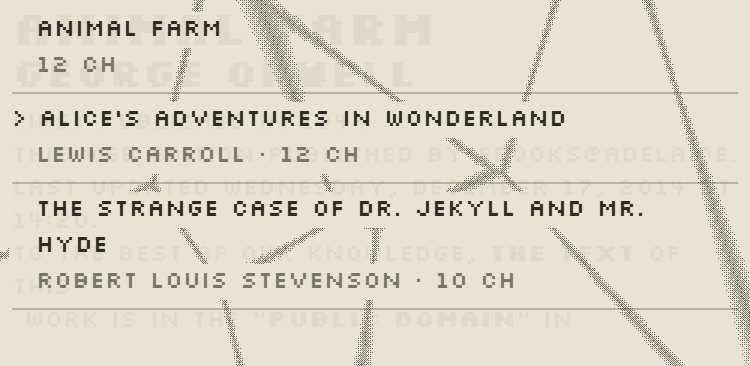
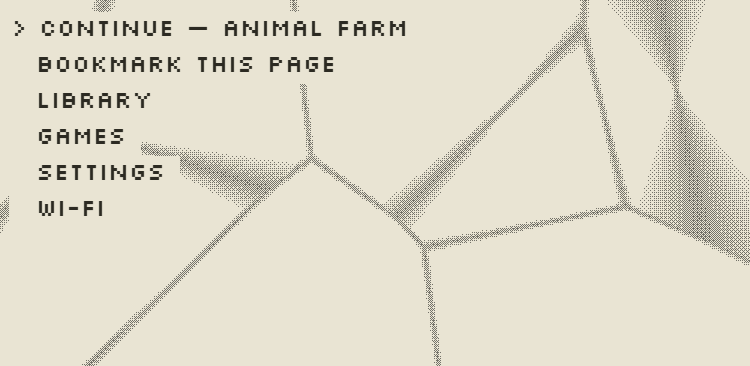
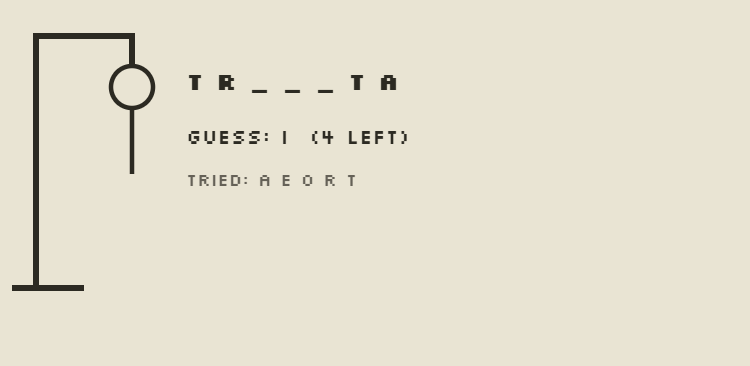
Captured from the simulator at the panel's real 250 × 122 resolution. This is genuinely how much fits on the screen.
A case, if you want one
Two printed parts, measured from Elecrow's own CAD rather than eyeballed off a photo. Closed, it's 67 × 42 × 15 mm.
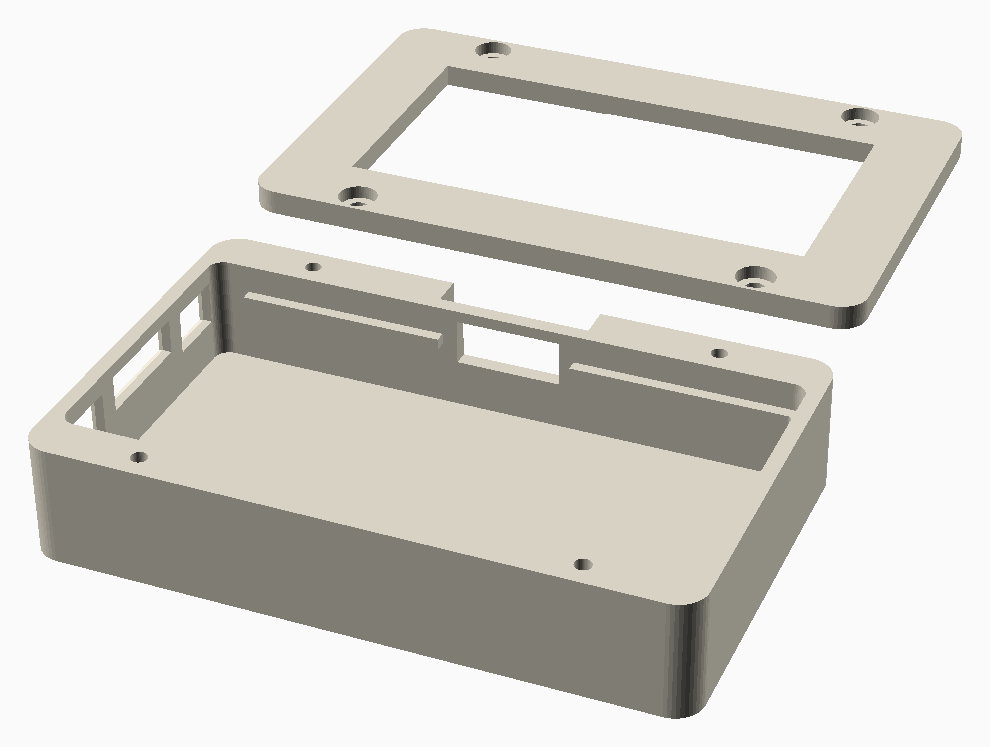
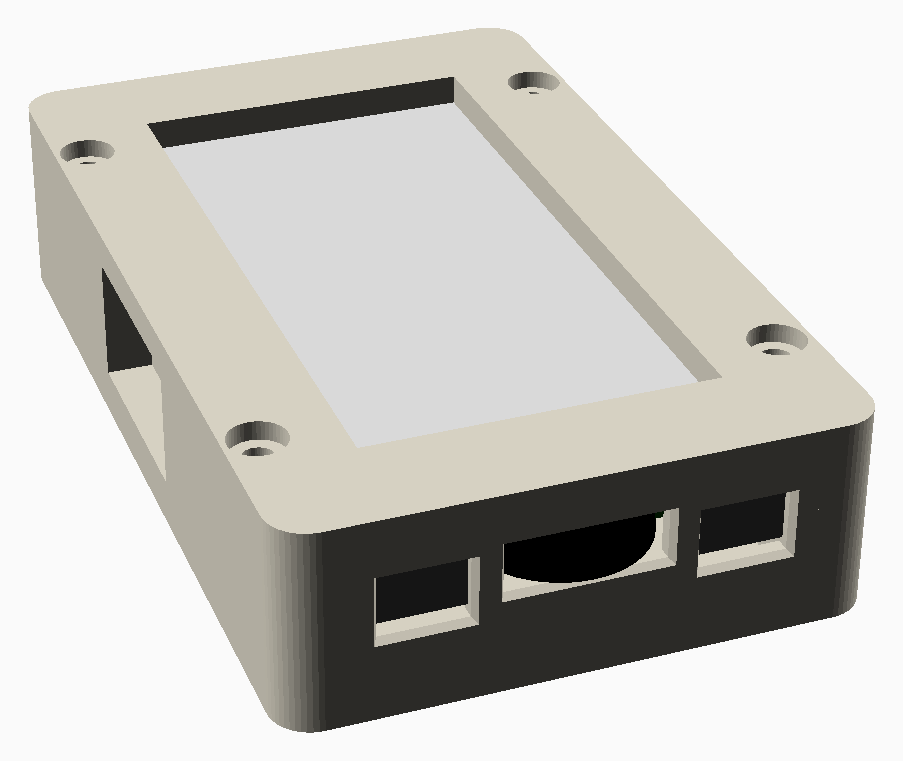
Renders, not photos — this hasn't been printed yet.
The catch
None of this has run on a physical board. The firmware compiles, and it's been reviewed line by line — that review found real bugs, including one that meant it never built at all. But the display driver, the pin mapping and the refresh timing are read off Elecrow's schematic and datasheets, not measured. The likeliest first result is a board that boots fine and shows nothing.
It was also built with an AI assistant (Claude), directed and reviewed by a person. That's worth knowing when you decide how much to trust a pin number.
So: the simulator is real and complete, and you can judge the whole reading experience from it today. The hardware side is a well-researched starting point that wants a multimeter. If you have one of these boards, a report either way is the most useful thing anyone could send.